Trust & accuracy
AI Real Estate Video Ethics: What We Will and Won't Change
By Pixel Polish Media · Updated June 2026 · ~6 min read
We polish how a home is presented, but we never change what the home actually is.
Why AI listing visuals are under new scrutiny
Agents have brightened photos and shot flattering angles for decades. AI is different because it can invent, not just enhance. A model told to "make this room beautiful" will add a window that isn't there, erase a support column, swap a parking lot for a lake view, or quietly enlarge a cramped bedroom. That isn't touch-up. It's misrepresentation, and buyers, brokers, and state real estate commissions are watching for it.
The risk is real. A listing that shows a view the property doesn't have, hides a defect a buyer relied on, or fakes the size and layout of a space can expose the agent to fair-housing and advertising complaints, disclosure disputes, and licensing review. Generative video is fast, but the liability is just as fast when the output drifts from the truth. That's why AI real estate video ethicsmatter. They're the foundation a trustworthy listing video is built on.
Our accuracy promise, in two lists
The cleanest way to talk about ethics is to be specific. Creative presentation is fair game. Anything that changes the facts a buyer would rely on is not. Here is the line, drawn plainly.
What we WILL do
Presentation choices that make a real space feel its best.
- Virtually stage empty rooms with representative furniture, and add a "virtual staging" label on request
- Add cinematic motion, pacing, and transitions to existing footage and photos
- Layer in lifestyle scenes that show how a space is lived in, not a different space
- Adjust season or time-of-day mood (a bright morning, a warm dusk) without faking the surroundings
- Apply branding, contact info, color grading, and sound design for a polished finish
What we WON'T do
Anything that changes the facts a buyer would rely on.
- Alter permanent property facts — square footage, ceilings, finishes, or fixtures
- Hide or erase defects like cracks, stains, dated systems, or deferred maintenance
- Invent views, scenery, or outdoor features the property doesn't actually have
- Change room layouts, move walls, or add doors and windows that aren't there
- Create misleading spaces by stretching rooms or faking scale to seem larger
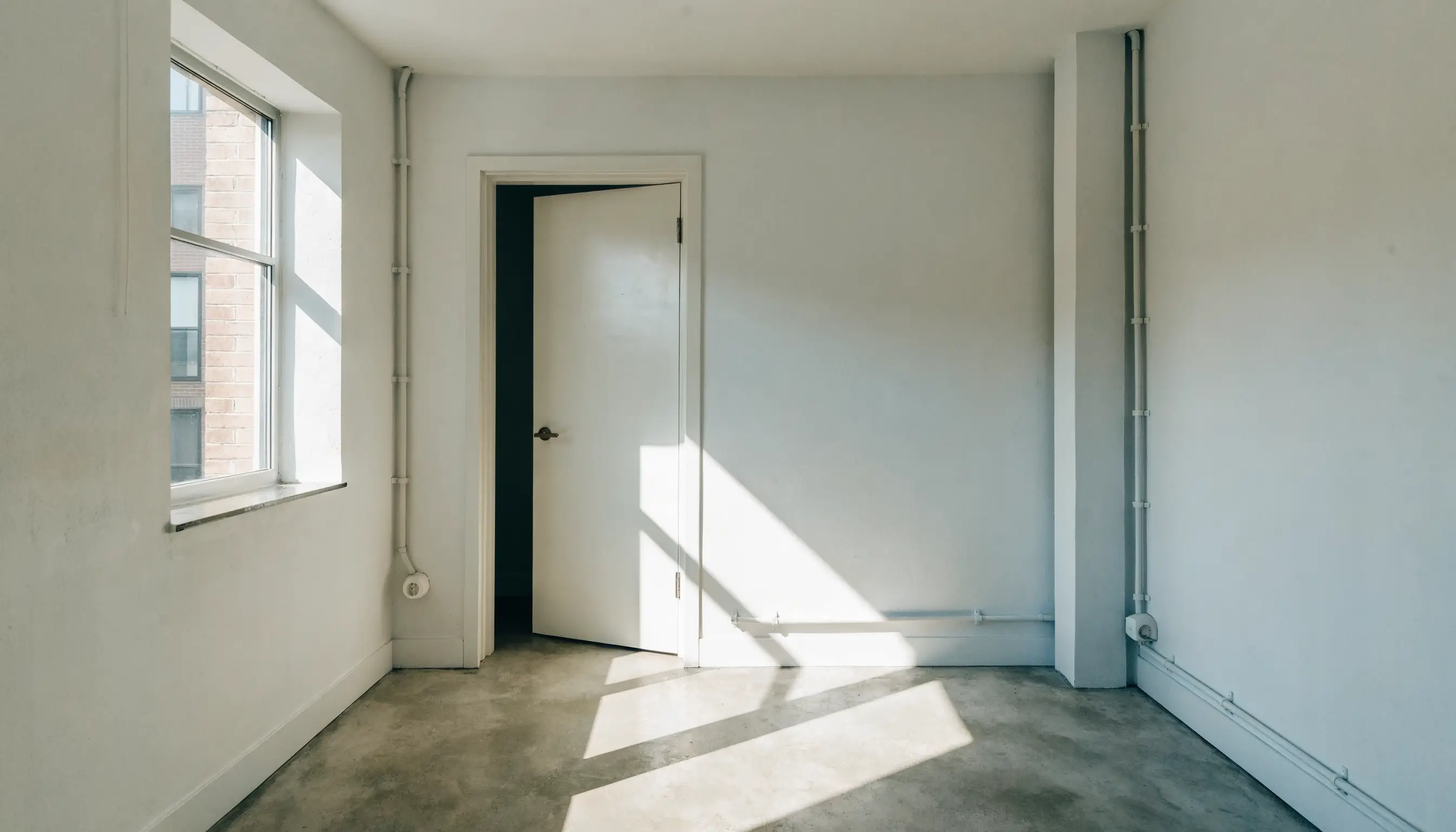
The piece that holds it together is virtual staging disclosure. Staged furniture and lifestyle scenes are a legitimate, widely accepted marketing tool. Labeling a scene as virtual or staged is optional and off by default. We don't mark scenes as staged unless you ask us to, and we'll add a clear label on request. Whether the label is on or off, the bones of the home stay real, so an accurate AI listing videonever invents a feature that doesn't exist.
Sometimes a client wants a renovation video, a "here's what it could look like after updates" concept for a dated or unfinished space. We do make those, but it's a custom job, clearly understood as a concept rather than the standard listing video. It's framed as a vision of what's possible, never passed off as the home as it stands today.
How a professional editor enforces the line
A policy is only as good as the checkpoint behind it. AI does the heavy lifting, then a professional editor quality-checks every order. That step is what keeps our promise from being marketing copy. Left alone, generative tools hallucinate furniture into walls, warp straight lines, and invent details that were never in the source photos.
Every order is checked against the real listing
Before a video ships, an editor compares each scene to the original photos. Do the rooms match? Are the proportions honest? Were any defects accidentally smoothed away? If you asked for a virtual staging label, is it there? Anything that drifts from the source gets fixed or pulled. That check is why an AI artifact never makes it onto a live listing.
This is the difference between a tool and a service. A one-click app hands you whatever the model produced, artifacts and all. We treat the AI output as a draft, then a professional editor signs off on accuracy before delivery, typically within three business days. You get the speed of AI without inheriting its mistakes. If something does slip through, we fix it for free.
This careful, quality-checked process is why our AI videos take a little longer than fully automated AI video tools. It's also why you can trust them more. A person looks at every scene before it reaches a buyer.
Why this protects your license and your reputation
Video is one of the most effective tools in real estate. Listings marketed with video are widely reported to earn more engagement and inquiries, and many buyers expect it. That reach cuts both ways. A misleading video travels just as far as an honest one, and when a buyer tours a home that doesn't match the marketing, the fallout lands on the agent, not the software.
An accurate listing video, quality checked by a professional editor, lets you market with confidence. You get the polish, the motion, and the staging that make a property stand out, without staking your license or your referrals on an algorithm's guess. You bring the photos. We polish them and keep them true to the home.